
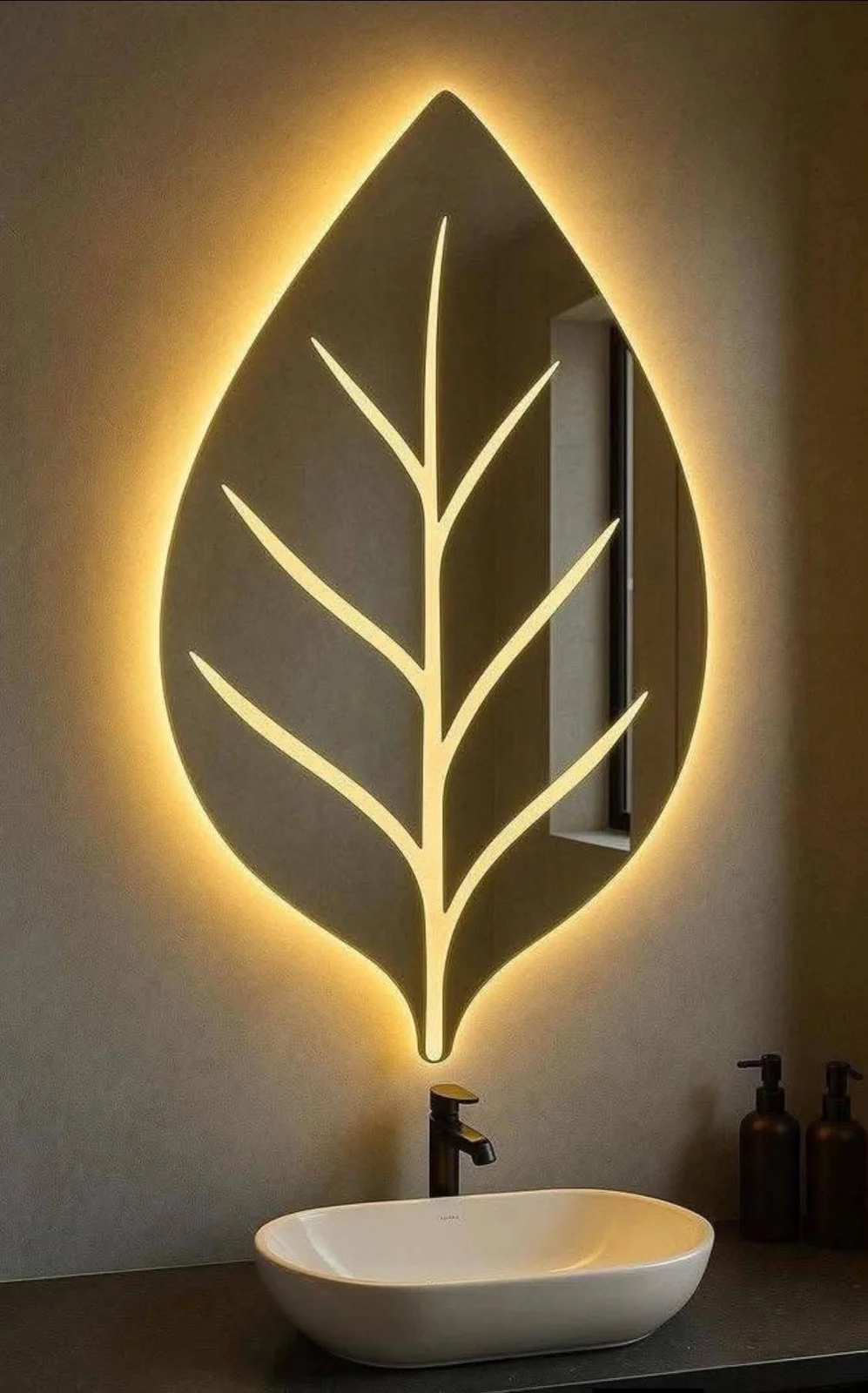
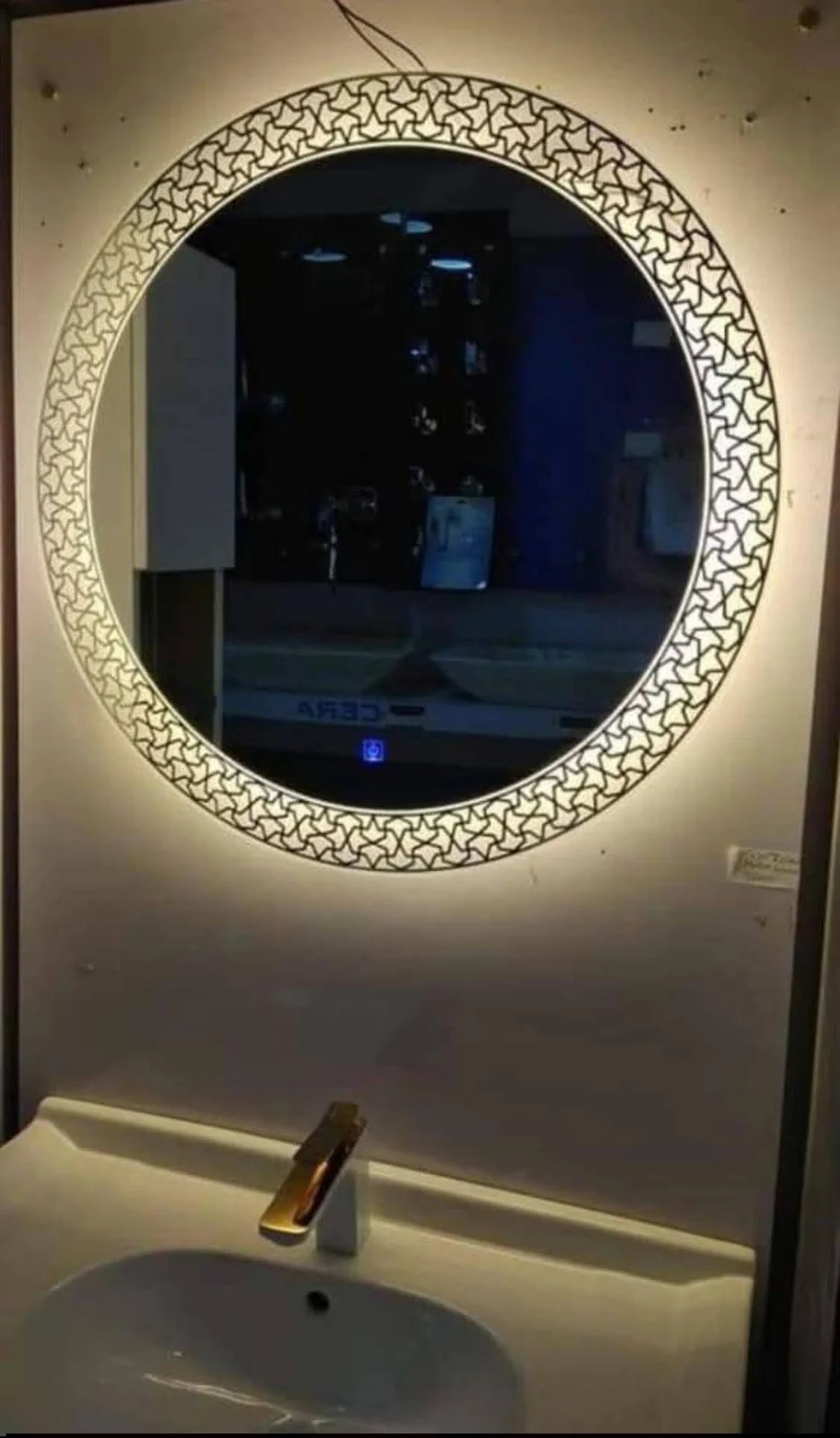
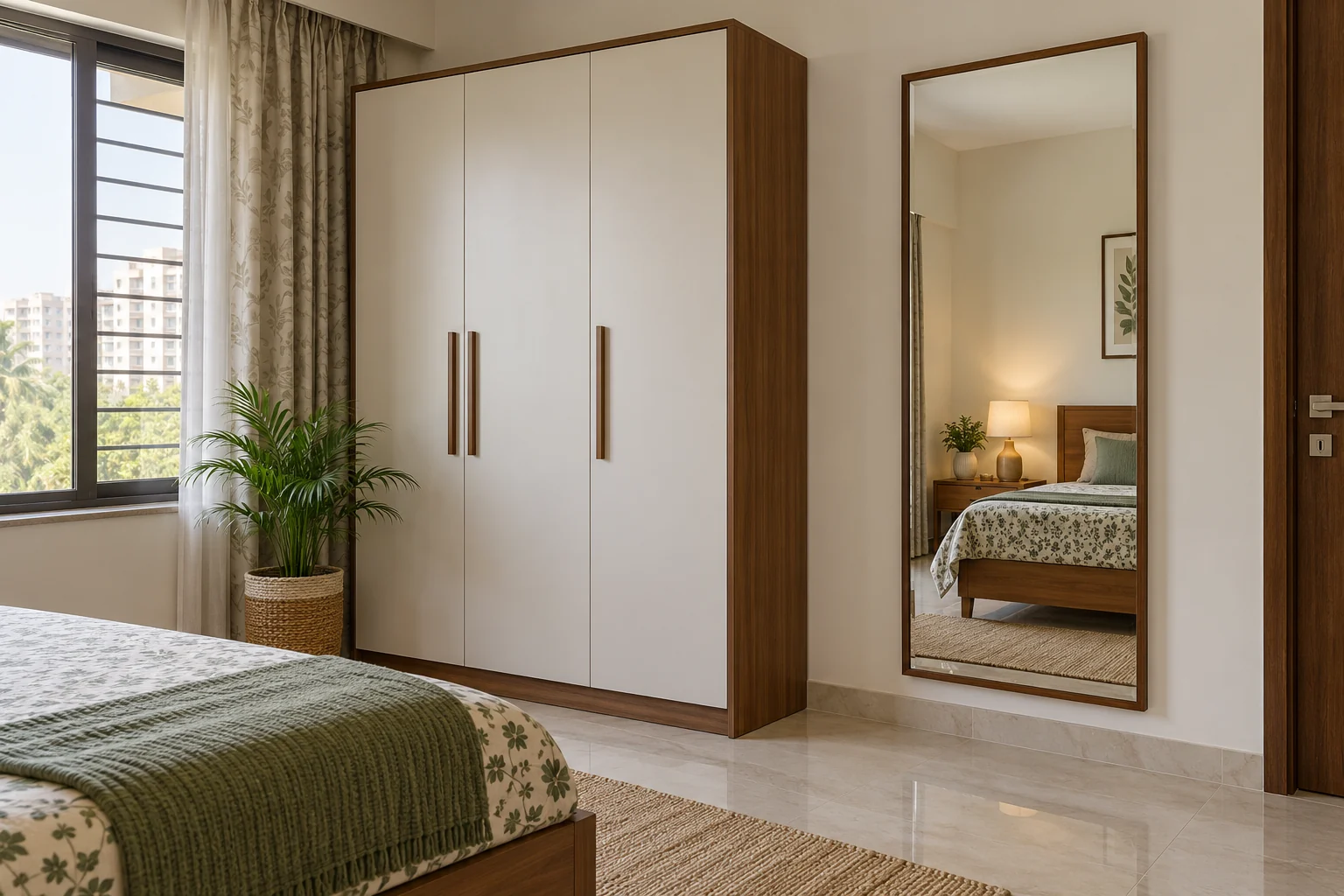
Mirrors are most of what people remember us for, oddly enough, more than the glass. We cut mirrors to the exact size of your bathroom or bedroom, fit LED lighting, demister pads and touch switches where wanted, and also do plain decorative wall mirrors, bevelled, framed, whatever suits the room.
Here's what people usually ask before ordering one.
What's the real difference between an LED mirror and a normal mirror with a light fixture above it?
A normal mirror just reflects light from a bulb mounted somewhere else, usually above it, which throws a shadow under your chin and around your eyes. Anyone who's tried shaving or doing make-up under one knows this problem. An LED mirror has the light built into the mirror itself, usually around the edge or behind a frosted strip, so the light comes from the mirror, not from one point above it. That gives even lighting across the face with no harsh shadow. It also uses less power than a separate light fixture, and there's nothing extra to wire up on the wall.
How does the light actually get into the glass, is it lit from inside?
Two common ways. In a backlit mirror, LED strips sit behind the mirror around the edges, and the light spills out from behind, giving a soft glow around the frame. In a front-lit or edge-lit mirror, LEDs are set along the mirror's edge, often behind a frosted glass border, and the light travels through that frosted strip so it looks like the edge itself is glowing. Both give even, shadow-free lighting, the choice mostly comes down to the look you want, a soft halo glow behind the mirror, or a lit border around it.
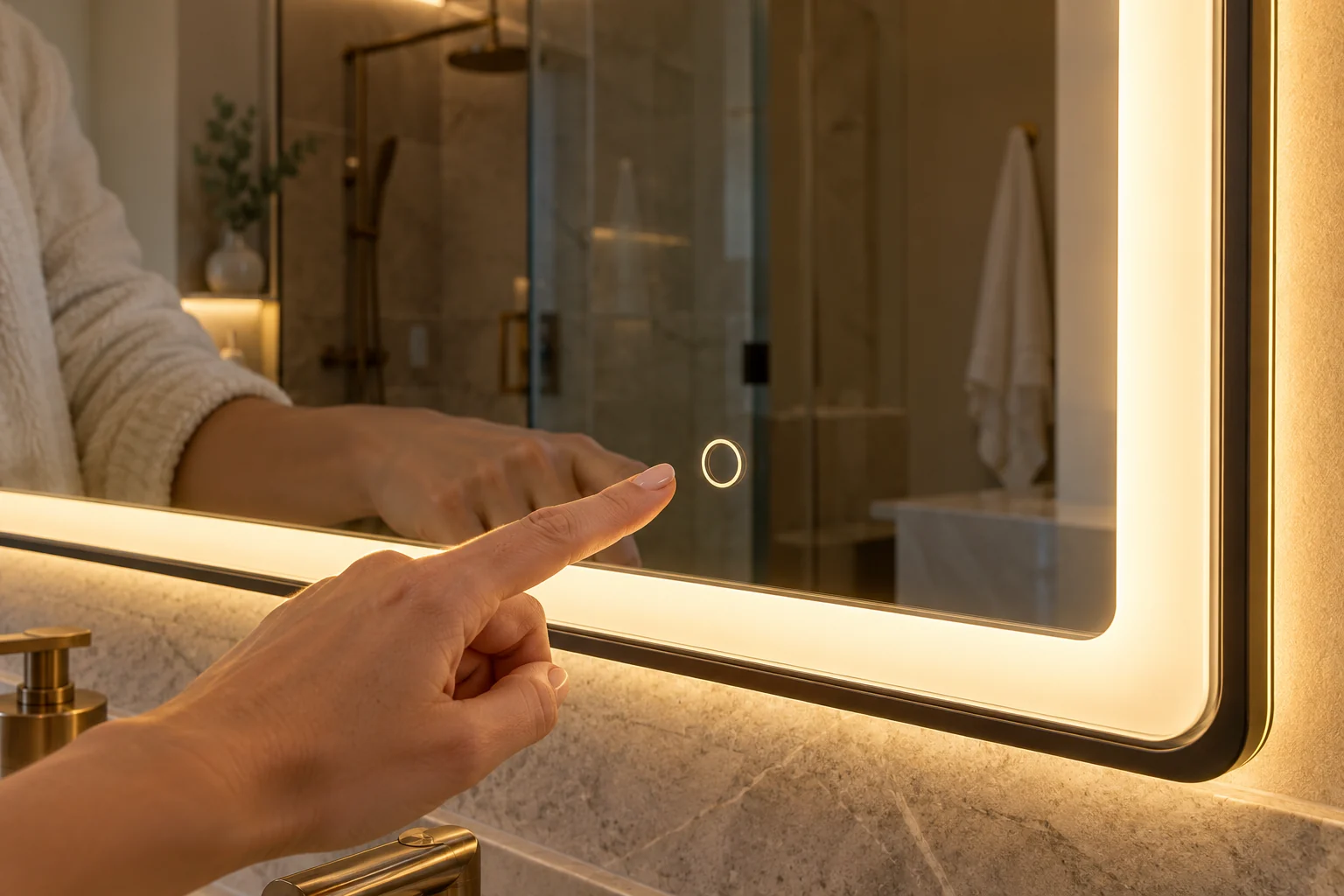
What is a touch sensor LED mirror, and is it safe to touch with wet hands near water?
A touch sensor mirror turns on and off with a light tap on the glass instead of a physical switch, no rocker or button to fumble for with wet hands. It's designed for bathroom use, so it's built to handle occasional water splashes on the sensor area, but like any electrical fitting near water, it should be installed correctly with the wiring kept away from direct spray, which is exactly why we handle the fitting ourselves rather than leaving it to a general electrician who may not have wired one of these before.
What is a demister or anti-fog pad, and does it actually stop the mirror fogging up completely?
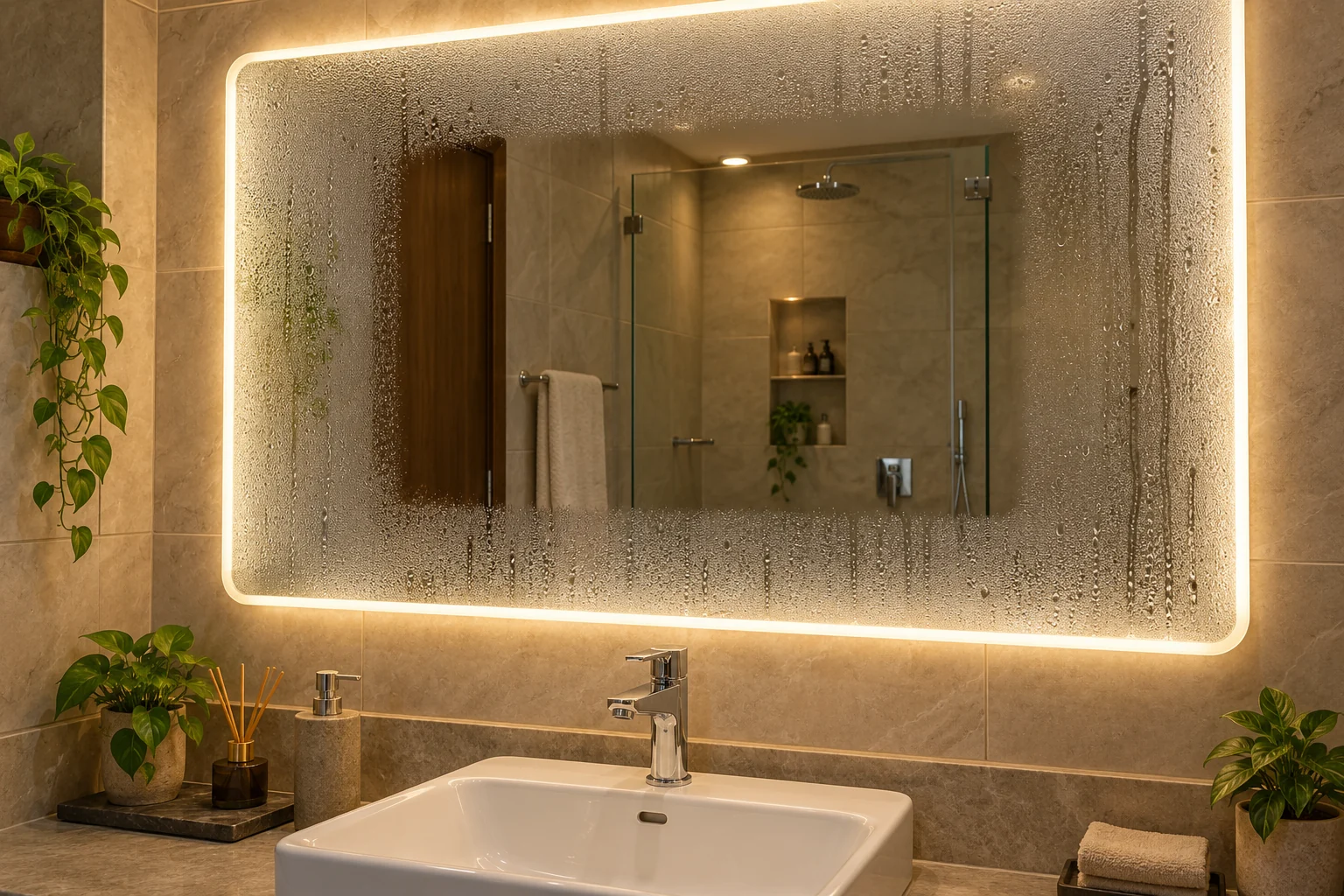
A demister is a thin heating pad fitted behind the mirror glass. It warms that area just enough to keep it above the room's dew point, which is the temperature at which moisture condenses, so fog doesn't form there after a hot shower. It works well, but here's the part most people don't know until after buying one: the heated area is not always the full size of the mirror. Some mirrors heat the entire back, others only a central patch. If you want the whole mirror to stay clear, not just the middle, ask specifically about the heated area size before ordering, not just the mirror's overall dimensions.
Does the demister turn on automatically, or does it need a separate switch?
Depends on how it's wired. Some demister pads run on their own switch or timer, so they can be turned on before your shower and left running. Others are tied to the same touch sensor as the LED lights, so the mirror lighting and the demister come on together. We'll set this up the way that suits your routine, if you'd rather the demister run independently so it's ready by the time you're done showering, that's a simple wiring choice we can make at fitting time.
How much does an LED mirror cost in Kolkata?
It depends mostly on size and features. As a rough 2026 idea, a basic backlit LED mirror around 18x24 inches runs somewhere between ₹3,500 and ₹5,500, a larger 24x36 inch backlit mirror sits around ₹6,500 to ₹9,500, and the same size with a touch sensor and multiple light tones (warm, cool, natural) moves up to roughly ₹8,000 to ₹12,000. A bigger premium mirror with a built-in demister, say 30x40 inches, can run ₹12,000 to ₹18,000. These are ballpark figures, the real price depends on your exact size, finish and features, which is why we always measure and quote based on your actual bathroom or wall.
Can I get a custom size and shape LED mirror, not just a plain rectangle?
Yes, and this is most of what we do, actually. Bathrooms are rarely a standard size, so we measure on site and cut the mirror to fit exactly, round, oval, arch-topped, whatever suits the wall, rather than a stock rectangle that leaves an awkward gap. LED strips and demister pads can be fitted to most custom shapes too, though very tight curves or unusual cutouts may limit where the lighting can sit, we'll tell you honestly if a shape you want changes what's possible with the lighting.
What's the difference between warm white, cool white and natural light LED mirrors, and which is best for make-up?
Warm white gives a yellowish, cosy glow, closer to a normal room bulb, cool white is a brighter, bluish-white light, and natural or daylight white sits in between, closer to actual daylight. For make-up and grooming, natural white is usually recommended since it shows how you'll actually look under daylight, rather than warm light which can make foundation shades look off, or cool light which can look a bit clinical. A lot of mirrors now come with a switch to move between all three, so you're not locked into one tone.
What is a colour-changing LED mirror, and is it actually useful or just decorative?
A colour-changing mirror lets you shift between different light tones, usually warm, cool and natural white, sometimes with a dimmer too, using the touch control. It's genuinely useful for the reason above, matching light to the task, bright and cool for a quick shave, warmer and softer for a relaxed evening routine. Where it becomes more decorative than useful is in mirrors offering full RGB colour options, reds, blues, greens, that's more about mood lighting for a feature wall than practical bathroom use.
Can an LED mirror have a clock or a Bluetooth speaker built in, is that reliable long-term?
Yes, both are available, a small digital clock built into the glass, or a Bluetooth speaker fitted behind the mirror so you can play music while getting ready. They work well when fitted properly, but they are extra electronics in a humid bathroom environment, so the honest answer is they'll need a bit more care than a plain LED mirror, keep water off the speaker grille area, and if the clock display ever dims or the speaker cuts out after a few years of bathroom humidity, that's more likely the electronics ageing than a fitting fault. If you mainly want music, a separate waterproof bathroom speaker is sometimes a more repair-friendly choice than one built into the mirror.
What's the difference between a bevelled edge mirror and a plain flat-polished edge mirror?
A bevelled edge is cut at an angle along the border of the mirror, usually somewhere between half an inch and an inch wide, which catches light and gives a subtle framed, faceted look without an actual frame. A flat-polished edge is just smoothed straight down, no angle, a clean plain look. Bevelling needs a slightly thicker glass to cut into, so it costs a bit more and isn't usually done on very thin mirrors. For a decorative wall mirror or a dressing mirror, bevelled adds a nicer finish. For a plain bathroom mirror that's mostly functional, flat-polished is common and works just as well.
What is a frameless mirror, and does it need extra support besides the wall fixing?
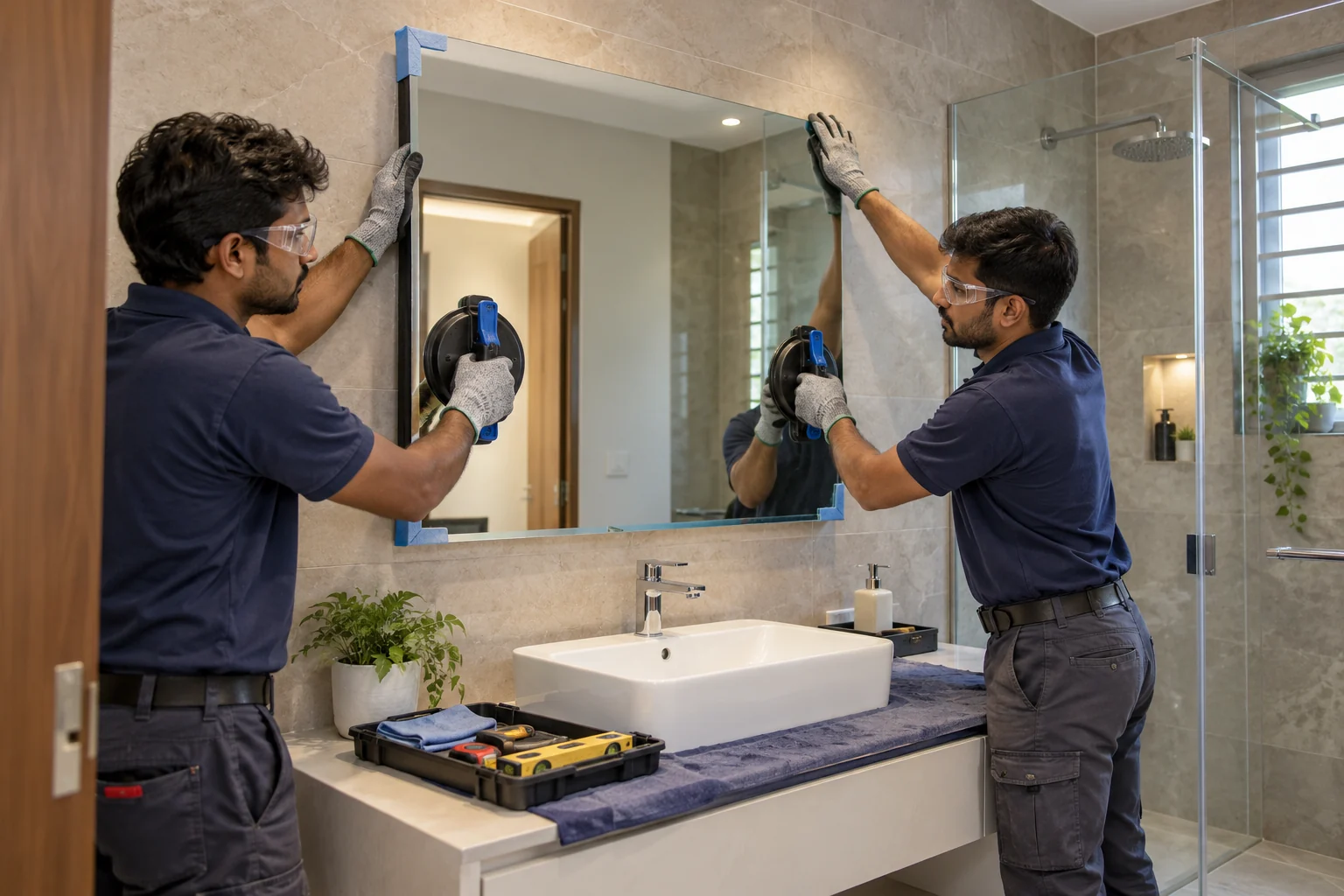
A frameless mirror has no visible frame or border, just polished glass edges, held to the wall with clips, adhesive, or a mix of both depending on size and weight. Smaller and medium mirrors are usually fine with a good adhesive plus a couple of small support clips at the bottom for safety. Larger or heavier mirrors need proper wall clips or a mounting channel, not adhesive alone, since a heavy mirror held only by glue is a real safety risk over time, especially with any wall vibration or humidity affecting the adhesive. We'll always tell you if a size needs the stronger fixing rather than defaulting to the cheaper option.
Why do bathroom mirrors get black spots or rusted edges over time, and can this be prevented?
This is called desilvering, it happens when moisture creeps in at the mirror's edges or through a scratch on the back coating and starts corroding the reflective silver backing underneath, showing up as black or brown spots, usually starting from the edges. Bathrooms are the most common place for this because of constant humidity and steam. It can be reduced by sealing the mirror's edges properly at fitting time, keeping the exhaust fan running during and after a shower, wiping away standing water at the bottom edge of the mirror rather than letting it sit, and avoiding mounting the mirror directly above where a shower sprays it. Once desilvering starts, it can't really be reversed, the mirror needs replacing, which is why the sealing at installation time matters more than people realise.
Can decorative mirrors be made from toughened glass, or are mirrors always plain glass?
Mirrors can be toughened, and for certain spots, a full-length mirror in a busy hallway, a large mirror low on a wall where kids are around, we'd actually recommend it. The toughening has to happen before the silvering and mirror coating is applied, so it's decided upfront, not something added afterward. Most smaller wall and bathroom mirrors are fine as plain glass since they're not in a spot where someone could fall into or lean heavily on them, but tell us the exact spot and we'll flag it if toughened makes sense there.
What size mirror should I get for my bathroom or dressing area?
For a bathroom mirror above a basin, a rough guide is keeping it a few inches narrower than the basin counter on each side, and tall enough that most of the household can see their face and shoulders comfortably without bending. For a full dressing mirror, floor-to- near-ceiling or at least head-to-knee height is the usual comfortable range. These are just starting points though, the right size really depends on your wall space and basin size, which is exactly what we check on the site visit rather than guessing from a general rule.
How is a mirror actually fixed to the wall, does it involve drilling?
Usually yes, for anything beyond a small lightweight mirror. A combination of a strong mirror adhesive and small support clips or a mounting channel at the base is the standard, safer approach, and the clips do need a few drill points into the wall. If your wall is tiled, we drill carefully to avoid cracking the tile, and if you'd rather avoid any drilling at all, adhesive-only mounting is possible for smaller, lighter mirrors, though we'll be upfront if a mirror is too large or heavy for that to be safe long-term.
Can a cracked or broken mirror be repaired, or does it always need full replacement?
A cracked mirror can't really be repaired in a way that hides the crack, once the glass or the silvering underneath is damaged, replacement is the only proper fix. What can sometimes be saved is the frame or the LED and demister fittings around it, if those are still working fine, we can often just replace the mirror glass itself and refit it into the existing setup, which costs less than redoing the whole unit from scratch.
Do LED mirrors use a lot of electricity?
No, this is one of the better things about them. LED lighting draws very little power compared to a normal bulb fixture, and since the light is built into the mirror rather than needing a separate fitting, there's no extra wiring load either. Running an LED mirror for a typical daily bathroom routine costs next to nothing on your electricity bill, it's genuinely one of the more efficient light sources in the house.
Does Sarada Glass supply and fit LED and decorative mirrors across Kolkata and North 24 Parganas?
Yes. We're based in Keotia, near Dum Dum, and we regularly work across Madhyamgram, Barasat, Barrackpore, Bhatpara, Naihati, Salt Lake, New Town and Rajarhat, along with Kolkata itself. We measure on site, so send us a photo of the space on WhatsApp and we'll talk you through the right size and features for it.
How do I get a free quote for a mirror?
Message or call us on WhatsApp, 8250144620, with the room, the rough size, and whether you want LED, demister, or just a plain decorative mirror, and we'll arrange a free site visit to measure properly and give you a written quote. Or use the short form on our Contact page if you'd rather type it out.